
Kicking the ‘Discount Drug’: How Kenneth Cole is Playing Offense in a Sea of Sameness
Global CEO and President Jed Berger explains why healthy, disciplined growth beats chasing fast retail dollars every time.
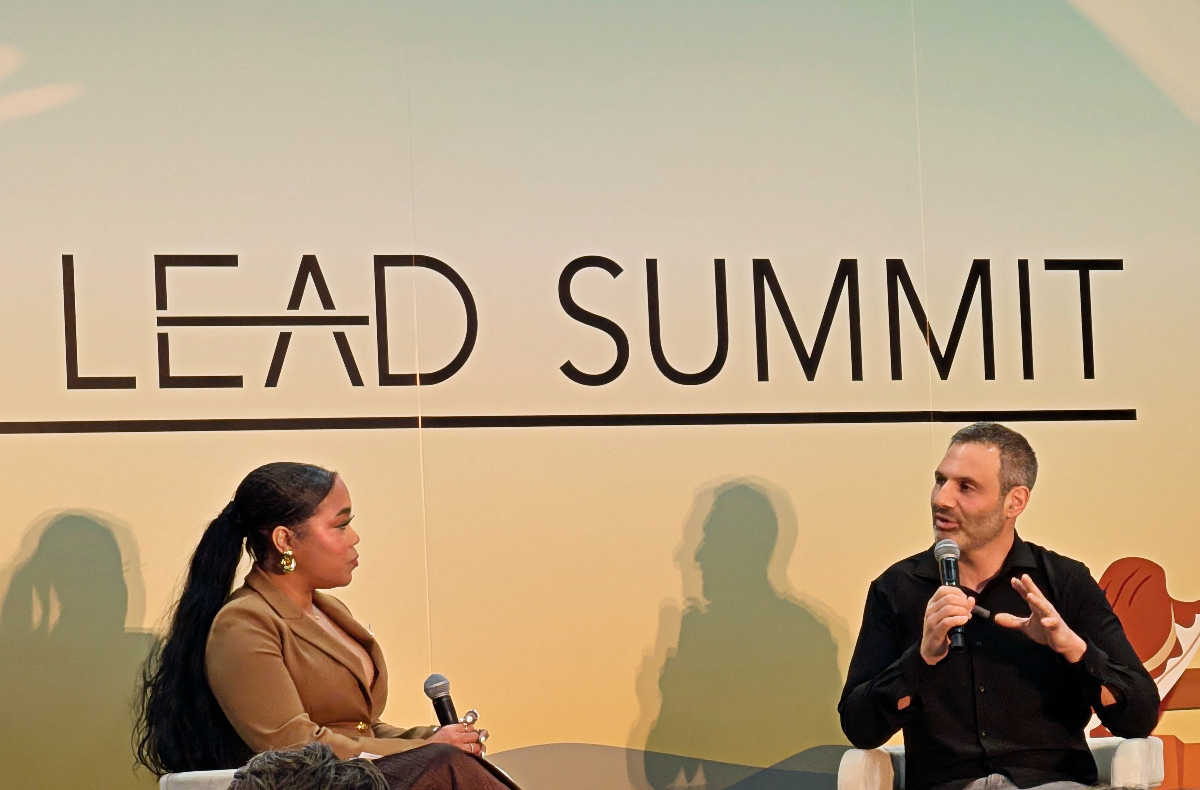
Jed Berger doesn’t mince words about where the American retail market is right now. “America is on the discount drug,” says the Global CEO and President of Kenneth Cole Productions. “It has been for a while.” By contrast, Berger has spent the last several years engineering a deliberate, disciplined growth strategy for one of fashion’s most storied and socially conscious brands, and has no intention of getting hooked.
Berger recently took the stage at The Lead Summit with a clear framework for how he thinks about building a brand in 2026: offense versus defense, though he acknowledged that not every company gets to choose which one it’s playing. In 42 years of business, Kenneth Cole has played both sides by closing stores, restructuring distribution and going from publicly traded to privately held. “There are times in all companies’ journeys where they’re playing defense,” he says. But Berger came in to play offense, and he’s been deliberate about what that means. “I put the word ‘healthy’ in the growth strategy purposely,” he says. “If I wanted to grow the business by $500 million to $1 billion in retail sales by 2027, I could. It would have long-term negative ramifications on our overall business.”
That discipline shows up in how Kenneth Cole is approaching its product strategy. The brand recently launched a modern professional line, a full-price offering targeting a contemporary customer, that Berger says has far exceeded expectations. In a market where justifying full price has never been harder, the reception validated that a great idea when rigorously executed and clearly positioned can still command it. “Nothing ever beats a great idea,” he says. “A great product is always going to win.” But product alone, he’s quick to add, isn’t enough. “If you don’t connect all of those things — product, brand, distribution, social impact and price — your entire right position is lost against competition.”
On distribution, Berger is equally clear-eyed. The retail landscape has fewer players but more powerful ones, and the channels that remain, from department stores, TJ Maxx and Costco, to Amazon and TikTok, each operate by entirely different rules. For a brand management and licensing organization like Kenneth Cole, where revenue flows primarily through wholesale and direct-to-retail royalties, that means building a distinct business model for each channel rather than forcing a one-size-fits-all approach. “How you do business today with a department store is very different than how you do business with Amazon or TikTok,” he says. “Part of playing offense is making sure we are refining our business model so we have a strategy for all of those channels.”
International expansion is the biggest bucket in Berger’s growth strategy, and Europe is the priority. Kenneth Cole recently opened a store in Prague, relaunched its European e-commerce and has a store opening in Germany underway. A few hundred stores are planned globally over the next couple of years. The European market, he notes, operates very differently from the US; far less wholesale infrastructure means a much more substantial DTC presence is required to compete. “In America, we have over 20 amazing partners making what we sell,” he says. “In Europe, we have primarily one partner for clothing and footwear, which is a necessity to be able to really be direct-to-consumer the right way.” Berger believes the European consumer is not fundamentally different from the American one but has to be re-educated about what Kenneth Cole is all about: “We have a job to do to reintroduce people to who we are and what we stand for.”
That story runs deeper than product. From fighting the HIV/AIDS epidemic in the 80s and 90s to anti-gun violence advocacy and marriage equality, Kenneth Cole was built on purpose, and today that purpose centers on mental health. Founder Kenneth Cole chairs the Mental Health Coalition, which Berger describes as arguably the largest coalition of mental health organizations in the world. It informs everything: product, brand, content and collaboration. The vehicle for that storytelling is Purposeful Voices, a content platform that brings in like-minded partners to tell authentically human stories. The most recent campaign features ESPN anchor Malika Andrews, whose visibility, warmth and openness about her own mental health journey, including a period of significant struggle that few would ever suspect from watching her on television, embodies the essence of what the brand has always stood for. “That human story is what this brand has always told, what we’ve always advocated for,” Berger says. “There’s absolutely nobody else who is going to tell that story.”
In a market crowded with brands chasing the same customer with the same product at the same price, Berger’s argument is that authentic, consistent purpose is one of the few remaining forms of genuine differentiation. The sea of sameness is real, he says, and price alone is a race to the bottom nobody wins.
“You have to bring it all together,” he says. Winning in 2026, for Berger, isn’t really the point. “Winning is a tricky word,” he says. “We’re taking steps to get to where we want to go in 2028, 2029, 2030.”
Enjoyed this story? This article is just one of the ways Berns & Co. brings you closer to the ideas, people, and decisions moving our industry forward. Join our community of senior executives and industry insiders — subscribe to our weekly newsletter HERE.
About the Author:
Jessica Binns is Director of Content at Berns & Co., where she leads editorial strategy and content programming, including the launch of a new thought leadership series profiling senior executives shaping the future of fashion, retail, and consumer goods. A journalist and editor with more than 15 years of experience covering apparel, footwear, retail, trade policy and tech, she is a contributing writer for Vogue Business and the former Managing Editor of Sourcing Journal. Her work has also appeared in WWD, Footwear News, and Retail Dive, and she has appeared on CNN This Morning with Audie Cornish to discuss the evolving fashion landscape.

