
Eye on the Corner Office: KnitWell’s Patrick Walsh on the One Thing AI Can’t Replace in Retail
AlixPartners data shows service now outranks price for fashion shoppers. The owner of Talbots, Ann Taylor and Chico’s is betting its AI strategy on that shift.
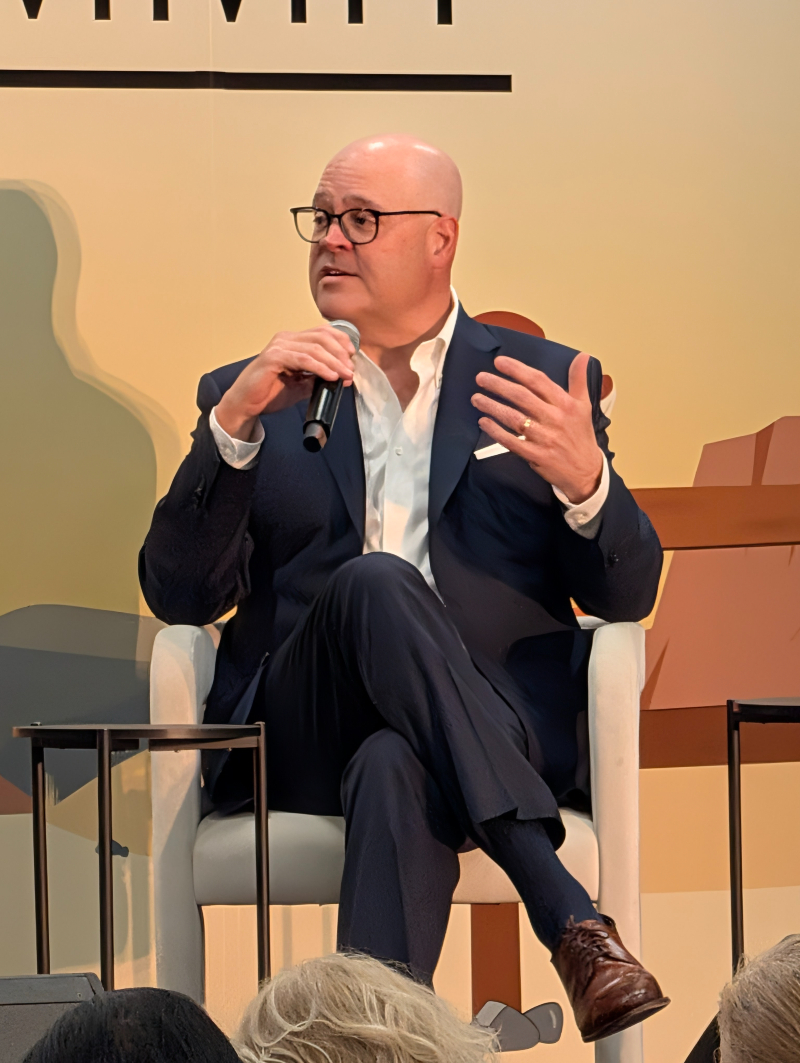
There’s a sign in a store window somewhere in New York City that grabbed Patrick Walsh’s attention. He spotted it walking through the city the night before he took the stage at The Lead Summit this week, and he’s already planning to borrow it for his next conference. The sign read: AI won’t have a cigarette with you.
It’s a throwaway observation that somehow captures everything Walsh, COO of KnitWell Group, is trying to build toward — and everything he’s trying to avoid. KnitWell oversees Ann Taylor, Loft, Lane Bryant, Talbots, Chico’s, White House/Black Market, Haven and Soma, a portfolio that spans thousands of stores, legions of associates and millions of customer interactions every year. Walsh has spent the last several years quietly rethinking what all of those interactions should look and feel like, and what role, if any, artificial intelligence should play in making them better.
His answer, refined through pilots and hard-won operational lessons, is nuanced in a way that the industry’s loudest AI voices rarely are. From his point of view, technology is only worth deploying if it makes the human connection more possible, not less. “I tend to get wrapped up in the idea that our individual associates should be the best physical manifestation of the best digital assistant in the world,” Walsh says. “But she just wants somebody to get her name and understand why she’s here.”
That instinct is backed by data that should give every retail executive pause. AlixPartners’ Consumer Sentiment Index — a broad survey of 9,000 consumers across the U.S. — measures what matters most to fashion shoppers across five pillars: price, product, service, access and experience. This year, in the middle of a tariff storm and a prolonged period of consumer price sensitivity, service jumped 34% in importance while price fell 13%. The consumer, it turns out, is not asking for a better deal. What she really wants is for a brand to see and understand who she is as an individual.
The implications run straight through to how KnitWell is building its store experience. At Ann Taylor, only 35 out of every 100 in-store transactions involve actually selling something to a customer. The other 65 are BOPIS pickups, e-com returns, order-from-store and ship-from-store activity. The store has become something far more complex than a sales channel, and the associate’s job has become something far more multifaceted than simply selling blazers and blouses. KnitWell has responded by developing two new core performance metrics, cost to serve and productivity, that account for the full omnichannel workload rather than simply penalizing stores for the traffic that isn’t converting to a traditional transaction. “We don’t want to rush her out when she’s half dressed,” Walsh says.
The most compelling proof point in KnitWell’s AI story is a proprietary clienteling tool called Concierge, piloted first at Talbots — deliberately, because the brand has the strongest selling culture in the portfolio. Over the last decade, Talbots associates have penned more than five million individual handwritten thank-you notes to customers. That’s the standard Walsh was working against when he decided to introduce AI into the mix. The pilot targeted a familiar clienteling challenge: ahead of a major brand event, associates face a contact list of roughly 750,000 individual customers. Historically, teams got through maybe 300,000 contacts at best. With Concierge, KnitWell reached 92% of the list, with significant increases in traffic and appointments to follow.
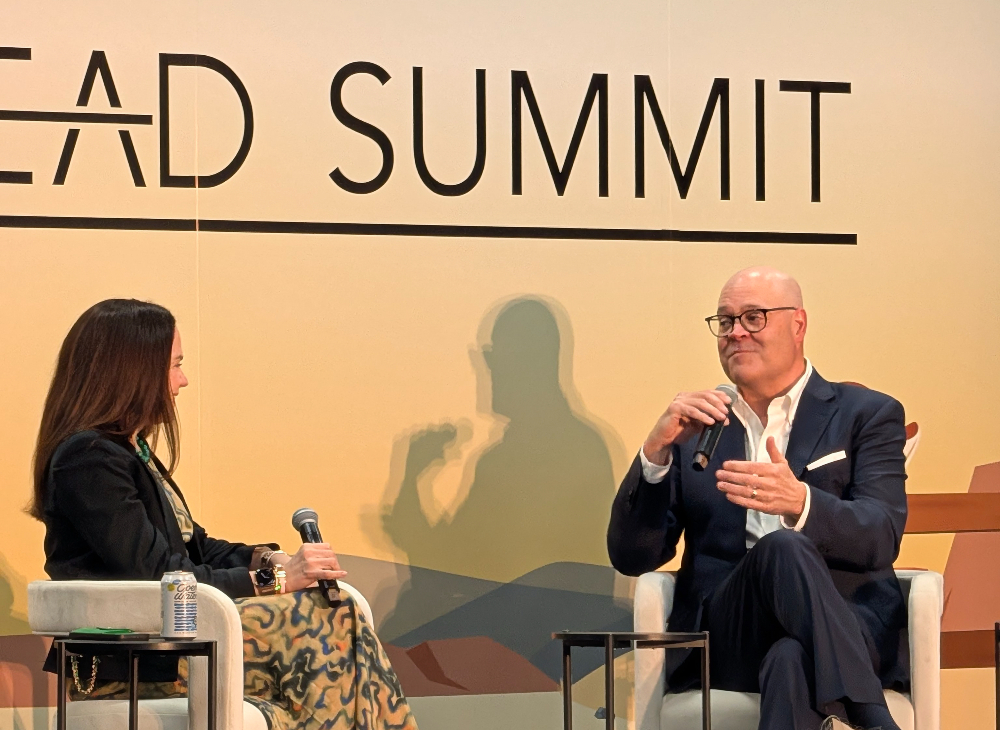
Sonia Lapinsky, Partner and Head of Fashion Retail at AlixPartners, and Patrick Walsh, COO of KnitWell Group, co-presented a featured session at The Lead Summit focusing on AI in retail.
But what really makes the result meaningful is how the tool works. Concierge develops a contact strategy based on customer preferences, drafts communications in each associate’s individual voice and delivers them ready to act on, but nothing is dispatched without human oversight. The associate is still in the loop, and still very much the author of the relationship. “The emails or the texts or the calls don’t happen without some human intervention,” Walsh says. At Talbots, where an associate might know that a customer is going on vacation and bring her cookies, that distinction matters enormously. “We know her family and her backstory,” he says, “and what we don’t want is the future to not reflect the core DNA of the brand.”
Rolling out across the portfolio won’t be uniform. Ann Taylor and Chico’s are natural next steps, as both brands also share strong clienteling cultures. Soma is more complex; the fit appointment is a gateway to lifetime value there, and the question of what AI-assisted outreach looks like in that context hasn’t been fully resolved. KnitWell is moving at the pace each brand can absorb authentically.
For Walsh, the technology lesson he learned from the Concierge pilot is how easily incentives can undermine everything else, citing his own family’s recent shopping experience. An associate offered a 25% discount in exchange for booking an appointment, dutifully executing a corporate initiative while completely missing what the customer actually needed. “The corporate organization has a false sense of what’s actually happening out there,” he says, “because the teams are incentivized to do things that are not natural to the consumer in that moment.”
AI will inevitably keep getting smarter, KnitWell’s contact lists will grow longer and technology will create scarily precise personalization over time. But none of it matters, Walsh argues, without the foundational thing that no tool has ever been able to replicate. As that New York City sign put it: AI won’t have a cigarette with you. The retailers who remember that, and who build toward it rather than around it, are the ones with something worth protecting.
About the Author:
Jessica Binns is Director of Content at Berns & Co., where she leads editorial strategy and content programming, including the launch of a new thought leadership series profiling senior executives shaping the future of fashion, retail, and consumer goods. A journalist and editor with more than 15 years of experience covering apparel, footwear, retail, trade policy and tech, she is a contributing writer for Vogue Business and the former Managing Editor of Sourcing Journal. Her work has also appeared in WWD, Footwear News, and Retail Dive, and she has appeared on CNN This Morning with Audie Cornish to discuss the evolving fashion landscape.

