
Eye on the Founder: UNTUCKit‘s Aaron Sanandres on Building a Brand Men Didn’t Know They Needed
How the UNTUCKit co-founder and CEO turned a simple annoyance into a $200M brand — and what scaling it taught him about trust, taste and the limits of AI.
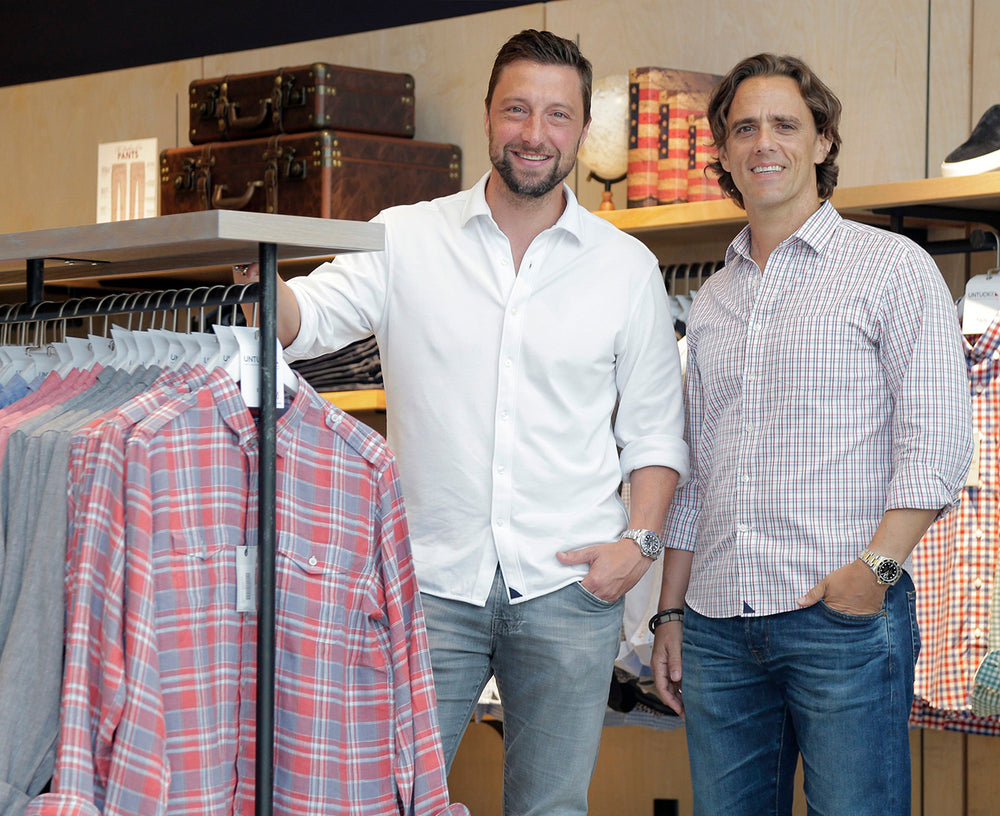
Aaron Sanandres didn’t set out to disrupt men’s fashion. He was just annoyed by his shirt.
“It was just very difficult to find a shirt that looked good untucked,” says Sanandres, co-founder and CEO of UNTUCKit, the men’s apparel brand he built from a Reddit thread and a personal frustration into a $200-million-plus business with more than 80 stores. “Once I noticed it, I started seeing it everywhere. Most guys just looked really sloppy.”
What followed wasn’t a leap of faith so much as a rigorous confirmation of something he and co-founder Chris Riccobono already suspected. “Half-jokingly, we like to say we undertook the largest study ever conducted in the history of the universe on the untucked shirt,” he says. “But it mattered, because it confirmed this wasn’t just our problem. There was real demand there.” The Reddit research showed men had already identified the problem themselves. What was missing was the solution.
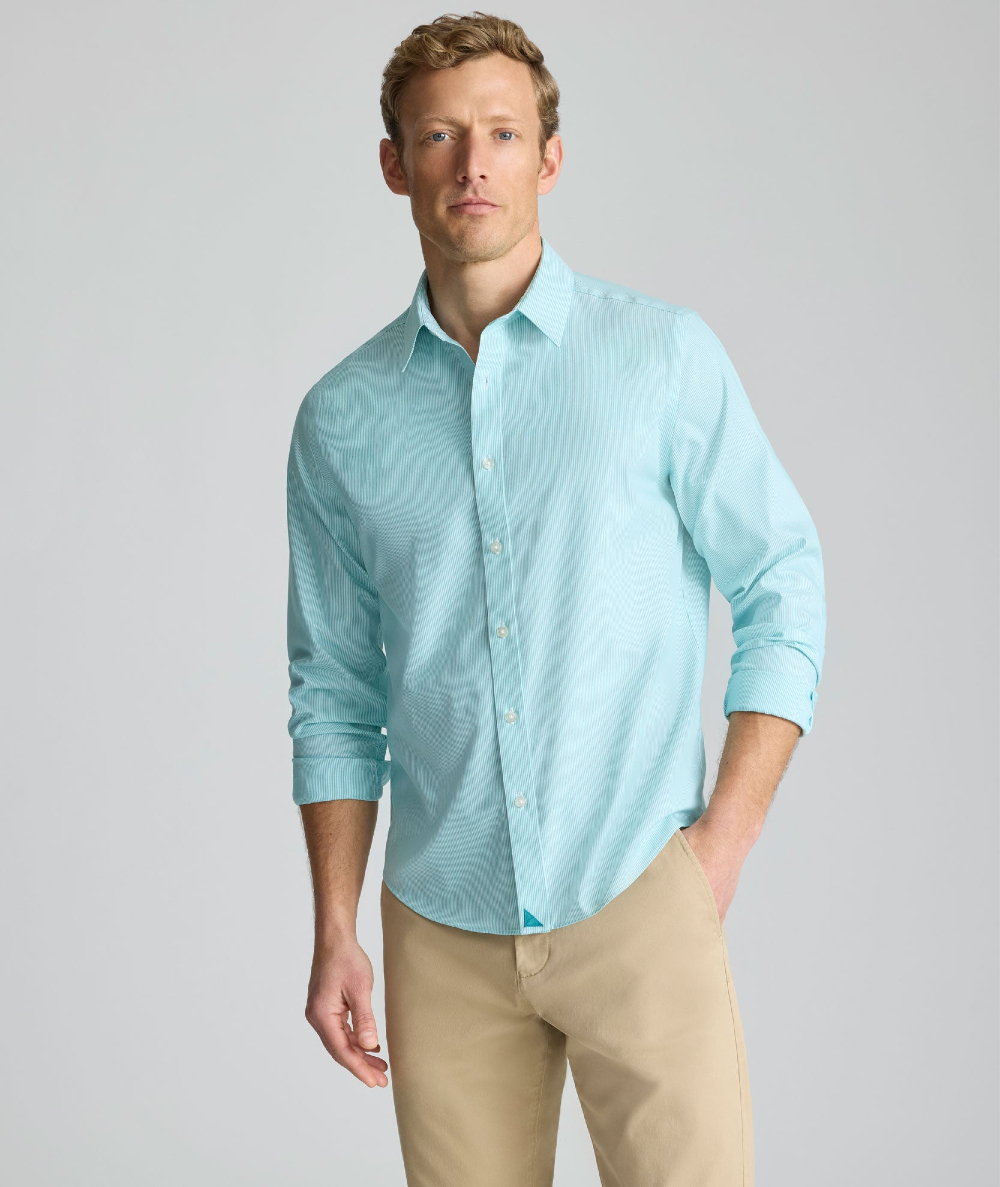
UNTUCKit was created to solve a problem in men’s wear.
The broader tailwind helped too. As dress codes relaxed and the two-closet wardrobe, work versus weekend, collapsed into one, men found themselves caught between wanting to look put-together and not wanting to think too hard about it. “Behavior was changing, but the options weren’t,” Sanandres says. “That’s really when it clicked that this wasn’t just a niche idea.” A niche becomes a market, he’s concluded, when two things converge: a problem people have already named and a cultural shift pulling demand forward. UNTUCKit had both.
Scaling from that insight into a genuine retail business required a different kind of unlearning. The early growth engine, digital marketing, was measurable, predictable, and worked beautifully until it didn’t. “Algorithms changed, channels got more crowded, and the same levers didn’t drive the same results,” he says. The harder shift was philosophical. “What I had to unlearn was this idea that everything needs to be perfectly efficient and immediately attributable,” says Sanandres. “Early on, you can run the business that way. At scale, you can’t.” Bets on brand, on physical retail, and on things that don’t show up cleanly in a dashboard quickly became the work.
Launching into physical retail, in particular, changed everything. UNTUCKit opened its first location in 2015, earlier than most DTC brands of its era, because the customer was asking for it. What Sanandres found inside those four walls couldn’t be replicated online. “You see how customers decide,” he says. “You watch someone try on three sizes, ask for validation, bring a spouse into the decision, or discover the brand for the first time. It’s human, not transactional.” The store, as he sees it, is fundamentally a trust-building environment, one that shortens the learning curve of the brand in a way digital never fully can.
That instinct for trust extends to how Sanandres thinks about product integrity in an environment where tariffs and sourcing pressures are pushing the entire apparel industry toward compromise. For UNTUCKit, the answer is simple and non-negotiable. “It’s fit and fabric. That’s the whole thing,” he says. “If you mess with that, you undermine the brand.” Rather than cutting corners on materials to protect margins, the focus has been on building efficiency elsewhere: consolidating production, tightening SKUs, investing in fabric programs. “Once you start quietly degrading the product, customers will pick up on it,” he says. “Trust is one of the most valuable things you have with your customer. And once you lose it, it’s incredibly difficult to get back.”
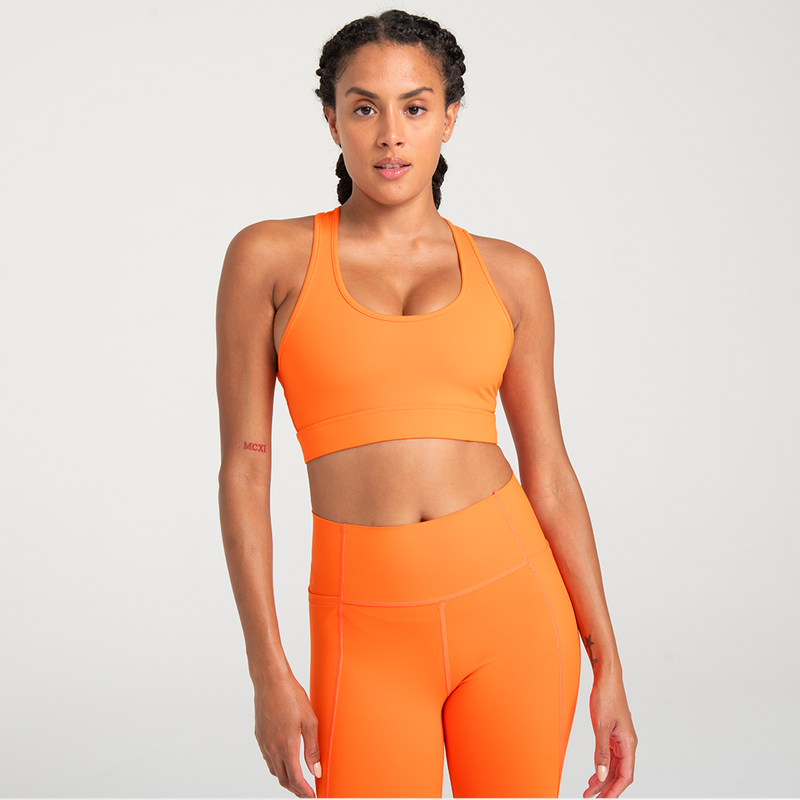
Activewear startup Definite Articles is made with sustainable synthetic performance fabrics designed to quickly biodegrade in certain conditions, unlike most workout clothes.
Running UNTUCKit at scale while simultaneously building Definite Articles, his sustainable performance apparel startup, might look like a divided focus. Sanandres sees it differently. The four-and-a-half-year-old activewear brand keeps him grounded in ways that carry over to the larger one. A fabric education section added to Definite Articles product pages drove a meaningful lift in add-to-cart. He brought the same thinking to UNTUCKit and saw a similar impact. It works the other way too: UNTUCKit’s more sophisticated CRM and lifecycle marketing engine is informing how Definite Articles approaches customer communication far earlier than it otherwise could. “The smaller brand keeps me sharp,” he says. “It forces you to stay close to the fundamentals, and that ultimately makes you better on the larger business too.”
AI, predictably, comes up. Sanandres is an early adopter and makes no apologies for it, deploying the technology across customer service, content creation, web design and data analysis at both companies. But he’s precise about where the hype outruns the reality.
“AI is very good at optimizing within a lane,” he says, “but it doesn’t have the connective tissue across the business to make system-wide decisions.” The trade-offs, the priorities, the why behind decisions — that still lives in the founder’s head or within a small group of decision-makers. Without access to that context, Sanandres believes AI’s potential impact is fundamentally constrained. “I see it as a really powerful tool,” he says, “but not a replacement for thinking. Yet.” For now, the brand, the product and the creative direction are matters of taste, conviction and, increasingly, the ability to write a good prompt.
Enjoyed this article? Eye on the Founder is just one of the ways the Berns & Co. weekly newsletter brings you closer to the ideas, people, and decisions moving our industry forward. Join our community of senior executives and industry insiders — subscribe here.
About the Author:
Jessica Binns is Editorial Director at Berns & Co., where she leads editorial strategy and content programming, including the launch of a new thought leadership series profiling senior executives shaping the future of fashion, retail, and consumer goods. A journalist and editor with more than 15 years of experience covering apparel, footwear, retail, trade policy and tech, she is a contributing writer for Vogue Business and the former Managing Editor of Sourcing Journal. Her work has also appeared in WWD, Footwear News, and Retail Dive, and she has appeared on CNN This Morning with Audie Cornish to discuss the evolving fashion landscape.

