
Stitch Fix CEO Matt Baer: AI Is Only as Strong as the Execution Behind It
At Shoptalk, Baer outlined how Stitch Fix’s turnaround is being driven by stronger merchandising, tighter operations, and a more disciplined use of AI.
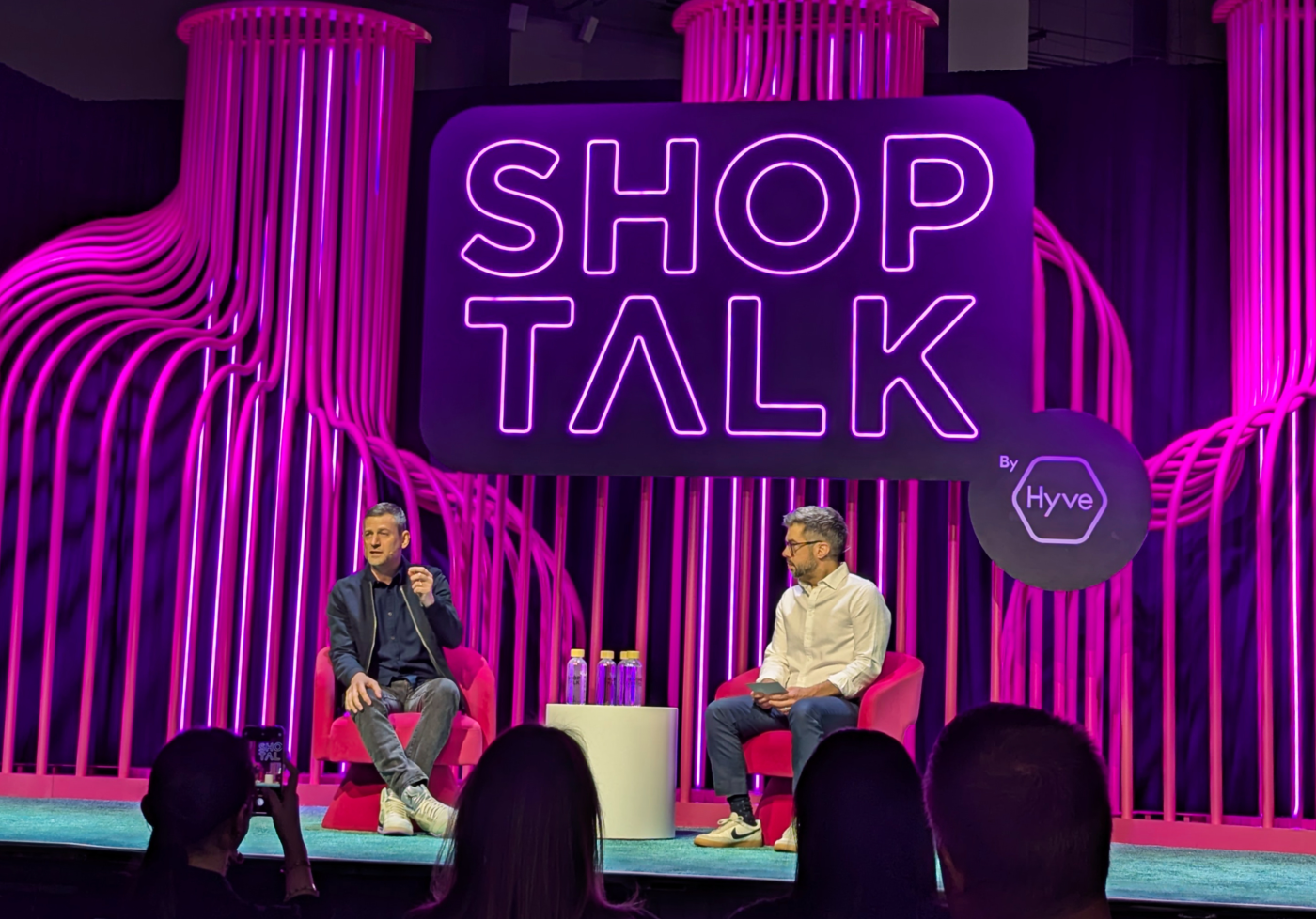
At Shoptalk in Las Vegas this week, Stitch Fix CEO Matt Baer, speaking on stage with Jason Del Rey, founder of The Aisle, framed the company’s turnaround in decidedly operational terms—arguing, in effect, that the fix wasn’t more innovation, but better execution. The personal styling and e-commerce platform, which combines data-driven recommendations with human stylists to curate apparel for customers, has spent the past two-and-a-half years refocusing on fundamentals: stronger product, tighter merchandising, and a more disciplined use of the data and technology that have long been its competitive edge.
Baer, who stepped into the role in the summer of 2023, described the company’s evolution as a recalibration rather than a reinvention. Stitch Fix’s core advantage—its depth of first-party client data—was never in question. “We know our clients better than anyone else possibly could… before their very first transaction,” he says, citing the company’s ability to capture detailed inputs on style, fit and budget upfront. Instead, the challenge was translating that advantage into a consistently compelling retail experience.
That required a cultural shift as much as a strategic one. Stitch Fix had long defined itself as a technology disruptor, but Baer emphasized a renewed focus on the basics of retail: delivering the right product, at the right time, for the right customer. At the same time, he pushed the organization to continue “disrupting itself”—not through novelty alone, but through continuous improvement. Baer says the result is a business that has moved past turnaround mode, with four consecutive quarters of revenue growth signaling early traction.
Where AI fits into that story is notable for its pragmatism. Rather than positioning generative AI as a transformative leap on its own, Baer frames it as an amplifier of Stitch Fix’s existing strengths. The effectiveness of large language models is only as strong as the data behind them, he says, a dynamic that plays directly to the company’s advantage.
That thinking underpins Stitch Fix Vision, a recently launched feature that allows users to upload images of themselves and see AI-generated outfits tailored to their preferences. Unlike many experimental AI shopping tools, the experience is tightly integrated into the company’s core model: every item shown is available for purchase, aligned to the customer’s style, and expected to fit upon arrival.
Importantly, the feature is doing more than generating interest. While initially designed to drive engagement and inspiration, Vision is also translating into measurable business impact. Customers who use the feature go on to spend significantly more in Stitch Fix’s “Freestyle” channel, its personalized e-commerce offering, over a 90-day period.
Even so, Baer is frank about what AI cannot replace, emphasizing that in a category defined by identity and personal expression, human input remains essential. Stitch Fix’s hybrid model—pairing algorithmic recommendations with human stylists—is a deliberate strategy. “Apparel is a personal category… steeped in nuance,” he says, reinforcing the company’s view that the most effective experiences will combine automation with human judgment.
That same philosophy extends internally. At a moment when many companies are using AI as rationale for workforce reductions, Baer described a different approach: using automation to remove low-value tasks, while redeploying capacity toward growth. For a company targeting the vast majority of consumers who actively dislike shopping for apparel, he suggested, the constraint is not efficiency—it is opportunity.
Ultimately, Baer anchors Stitch Fix’s long-term ambition in a familiar but still elusive ideal: true personalization at scale. He points to the “golden age” of retail, when local shopkeepers and tailors knew customers intimately—their preferences, their budgets, even their lives—and says that Stitch Fix is attempting to recreate that experience in a digital context.
The difference now is precision. With richer data, more advanced AI, and a feedback loop that continuously refines the experience, the company is working toward a future in which no two customers see the same Stitch Fix. If Baer’s strategy holds, the next phase of the business won’t be defined by AI alone, but by how effectively it turns that personalization into something far harder to replicate: sustained relevance at the individual level.
Enjoyed this article? Join our community of senior executives and industry insiders — subscribe here.
About the Author:
Jessica Binns is Editorial Director at Berns & Co., where she leads editorial strategy and content programming. A journalist and editor with more than 15 years of experience covering apparel, footwear, retail, trade policy and tech, she is a contributing writer for Vogue Business and the former Managing Editor of Sourcing Journal. Her work has also appeared in WWD, Footwear News, and Retail Dive, and she has appeared on CNN This Morning with Audie Cornish to discuss the evolving fashion landscape.

