
From K-Shape to E-Shape: Retail Expert Stephen Sadove on the 2026 Consumer Divide
The Mastercard advisor and former Saks Inc. CEO has a new way of describing today’s consumer economic dynamics.

For years, economists have used the letter “K” to describe the widening rift in the American economy. But according to retail veteran and former Saks Inc. CEO Stephen Sadove, that alphabet soup needs a refresh.
Speaking on the state of the industry as it moves deeper into 2026, Sadove argues that the “K-shape” — which implies the wealthy are getting richer while the lower-tier is actively sinking — no longer captures the nuance of the current market. Instead, he’s coined a new term: the E-shape economy.
The anatomy of the “E”
“I’m not so sure I would be using the letter K anymore,” Sadove says. “A K implies that the high end is getting even better and the low end is getting worse. That’s not actually what’s happened. What’s happened is the high has stayed high, and the low end isn’t getting worse — it’s flattening at about where it was.”
In Sadove’s “E” model, the horizontal bars represent distinct, steady plateaus:
The top bar: High-income consumers, buoyed by a Dow nearing 50,000 and resilient 401(k)s, continue to spend heavily on experiences, jewelry and travel.
The middle/bottom bars: Lower and middle-income consumers remain stressed by credit card debt and a steady 3% inflation rate on goods and services, but their spending has stabilized rather tha
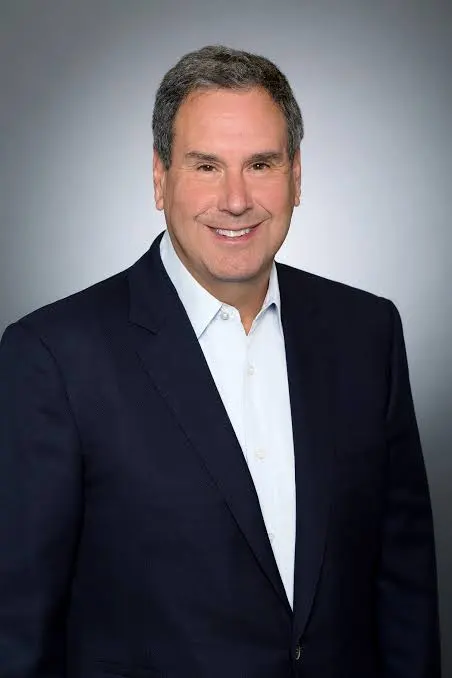
Stephen Sadove
n plummeted.
“The net of it is that the growth rate has been very strong in aggregate — in the 4% to 5% range,” Sadove notes. However, he cautions that much of this growth is “pricing inflation driven,” with actual unit growth hovering at a modest 1%.
Beyond the hype: AI vs. the human touch
While the National Retail Federation’s “Big Show” was dominated by talk of artificial intelligence and other technologies, Sadove remains a staunch believer in the physical storefront. Despite the rise of e-commerce, he points out that roughly 80% of commerce still happens in brick-and-mortar stores.
“I can’t tell you how many times I heard the Internet is going to kill the store,” he says. “But stores aren’t going away. In fact, they grew during the last holiday season.”
Sadove sees the path forward in seamless commerce, and he points to Gen Z as the blueprint: they shop on their phones while standing in the aisles, taking photos and comparing prices in real-time. To win, brands must provide deliver “ultra-personalization,” using AI not just to automate, but to empower store associates to understand customers at a “level of one.”
The rise of agentic commerce
Looking ahead beyond 2026, Sadove predicts the next frontier will be agentic commerce. “You can have your AI agent say, ‘I want to buy a television,’ and go find it for me. The agent will search the web, find the best price, interact with another agent, and do the entire transaction. It’s your personal assistant.”
While this technology is still emerging and affects just a fraction of the market, Sadove sees it as a growing and important piece of the shopper’s journey. Yet, he warns retailers not to lose sight of the fundamentals: innovation and value.
Luxury’s new “experience” phase
As for the luxury sector, Sadove describes it as “very healthy,” though the focus has shifted. During the pandemic, luxury was about “things” because people were stuck at home. Today, it’s consumers gravitate to experience-rich luxury like premium airline seats, high-end dining and quality workmanship.
Value underpins it all
“Value isn’t necessarily just low price,” Sadove says. “In luxury, value is the quality of the offering and the differentiation. Whether it’s a ski slope in a mall or ultra-personalized service in a boutique, the consumer wants it all: instantaneous availability and a human connection.”
Indeed, Sadove said underpinning all of retail today is the need for retailers and brands to deliver value and innovation. “Value is about the quality of the workmanship, the equity of the brand, and the innovation being brought to the party,” he says. “In this environment, the importance of value and innovation cannot be understated.”
Arthur Zaczkiewicz is a former executive editor at WWD and has appeared in WWD, WWD Voices, Beauty Inc, Footwear News, WWD JAPAN.com, Yahoo Entertainment, Yahoo Life, Yahoo Tech, MSN, Yahoo Canada, Yahoo News, Yahoo Singapore, Aol, Los Angeles Times, Yahoo Finance, Flipboard, Yahoo Sports, NewsBreak, Sourcing Journal, and Athletech News.
 Credit: Jessica Binns