
Pattern Beauty CEO on Brand Building in the Age of AI, Social Platforms, and Generational Change
CEO Christiane Pendarvis talks record-breaking growth, category expansion into body care and the requirements to win a multi-generational audience.
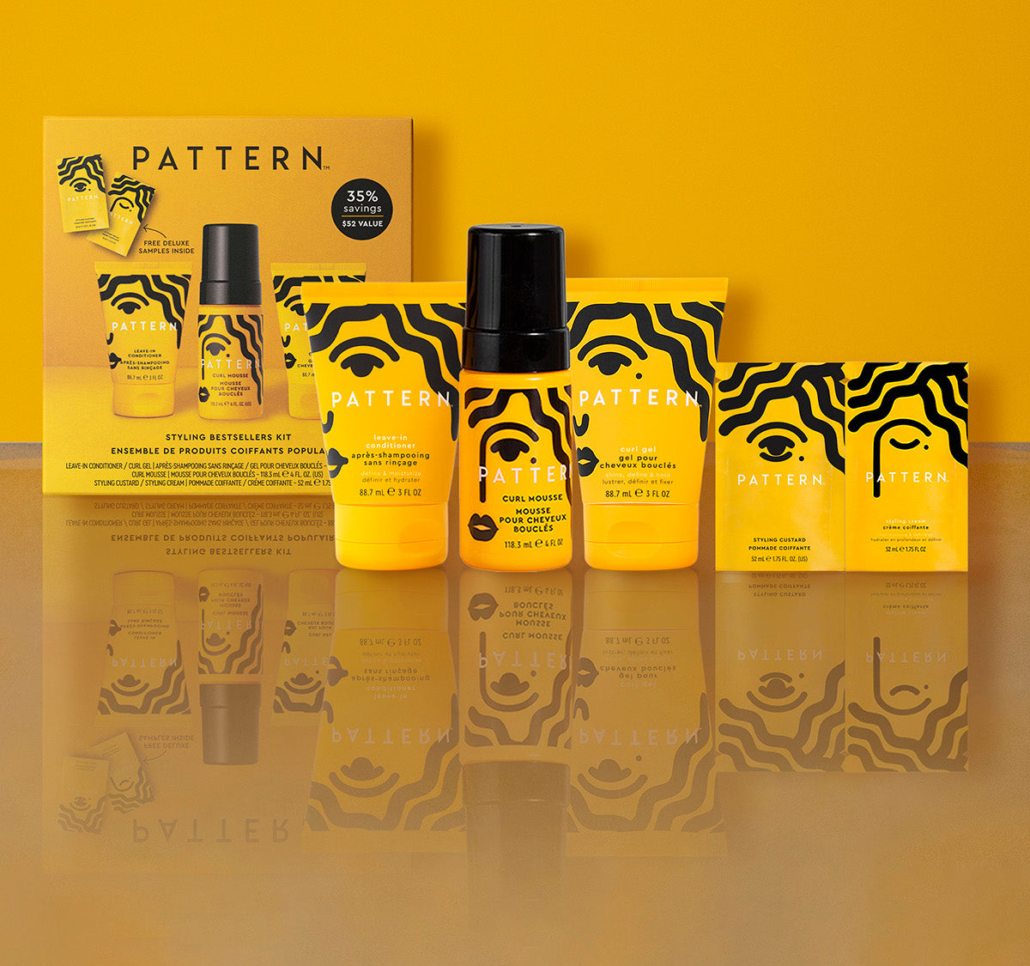
Fresh off a holiday shopping season that experienced record-breaking sales during Black Friday and Cyber Monday, Pattern Beauty is on a strong growth trajectory. Here, CEO Christiane Pendarvis chats with Berns & Co.’s editorial director Jessica Binns to discuss the brand’s strategic shifts, the importance of building brand awareness, and why there’s a focus on forging an emotional connection with consumers. This conversation has been lightly edited for clarity.
Jessica Binns: As we’re fresh off the holiday season, what did you see in terms of consumer behavior and what does it tell you about 2026?
Christiane Pendarvis: We were really fortunate at Pattern Beauty. We had a very strong holiday season. Consumers are willing to pay for great product they think has high value, and that’s what we saw during the holiday season. So, particularly in our direct-to-consumer channel, we saw record-breaking days for the holiday season, which is really exciting. Black Friday and Cyber Monday both broke previous records.
Consumers were shopping for themselves, for sure, and they were shopping for value. And when there were promotional time periods, we saw a bit of the stock-up mentality. We’re positioned as a more premium brand in the hair care space. So, it makes sense that they were taking advantage of the times where we were promotional. And we saw the same thing at our retail partners.
JB: And how does that make you feel about 2026? Are you optimistic about sales holding up and do you see consumers in a good place?
CP: Yes, 2026 for us really represents a continuation of the strategy that we had in 2025. As a brand founded by Tracy Ellis Ross, with the amount of followers and engagement and notoriety that she has, our brand still has relatively low brand awareness. A big focus for us in 2025 was working on brand awareness — and we still have quite a few ways to go with that.
We’re also focusing on the right channels to drive awareness in a really efficient way, and making sure we’re meeting customers with content showcasing that Pattern is for them. Consumers will say, “Well, I don’t have hair like Tracy, so Pattern is not going to work for me.” So, we’re working on dispelling that myth. Our internal tagline is “your texture, your style, by Pattern.”
However you want to wear your hair, whatever hair texture you have, if you want to do a wash-and-go one day, or you want to do a slick-back pony the next, we’ve got the complement of product for you — regardless of what your hair texture is. And that’s the narrative that we’re very focused on getting out this year.
JB: Let’s talk about skincare. Does it open up an addressable market? What are the opportunities?
CP: Tracy named it Pattern Beauty, not Pattern Hair, for a reason. Category expansion was always part of the plan, and we wanted to do it in a way that was genuine and authentic to her and what she cares about. And she’s a person who’s known for, obviously, physically taking care of her body, but everything about her is about self-care, and taking care of your skin is part of that.
We wanted to marry that with the equity that we’ve created in hair. Our tagline is “juicy and joyful hydration.” That’s what we embody, for hair, and now for body. We’re taking that same approach: if you need hydration, or you need moisturization, Pattern has developed a body care line that’s really for you and meets those needs. We’re for everybody. Everybody has skin.
JB: As a brand that’s beautiful because “juicy and joyful” really encapsulates an ethos that’s not tied to a category. It’s really great, and travels well.
CP: Yes, absolutely. I think everybody also wants to have that emotional connection. When we launched, we wanted to build an emotional connection with the consumer. The focus is on the emotion behind the brand, and asking: “What’s the narrative of storytelling behind the brand?” And that’s where the brand started. Our foundation was on social.
JB: Which are the most important social channels for the brand? And what do you do to ensure that the brand is showing up the right way in these channels?
CP: They’re all important. I think particularly for our brand, where we have a wide generational target, we’re really focused on everything from Gen Z (and maybe not quite yet, Gen Alpha) all the way to Baby Boomers. There’s been such a movement of consumers embracing their natural texture, and that’s relatively new for many people.
We are helping people figure out how to take care of their hair. This is not necessarily something that the professional stylist community has been trained on. So there’s more education needed for consumers. Because it’s so broad for us, we really have to be everywhere. Facebook is still very important for us because we have a disproportionate amount of Gen X and Baby Boomer consumers. TikTok is also going to be super important for us in guiding new customers. Instagram is probably more of our core. But we’re also figuring out how show up on Reddit. And what are we doing on podcasts?
Pinterest has definitely been, from an inspiration perspective, something that we’ve been leaning into as well. So I don’t think there is any one formula for the most important channel. When you’re thinking holistically about your consumer segment, you have to ask: “How am I delivering the right message to the right consumer in the right place where they’re able to receive that?” And that means that you’ve got to be everywhere.
JB: Yeah, let’s talk about LLMs, which was a theme at the NRF Big Show this year. What are you doing to ensure that you’re surfacing on platforms like ChatGPT and Gemini, where people are looking for advice and doing research on brands?
CP: We’re definitely focused on GEO (generative engine optimization), not just SEO, but the foundation of great GEO is actually still SEO, so you can’t ignore that. I think the content creator ecosystem also helps fuel it, because it’s not just about exposure, it’s about authority and credibility in the space. The more you can get organic engagement and positive reviews and sentiments from consumers, the more it is going to help you from an authority perspective.
Brands are also personalizing content on websites, personalizing emails, and personalizing SMS messages. You have to make sure the content and direction are right. For us, this year is definitely going to be one of experimentation.
JB: How do you feel about the geopolitical climate right now, and how is that affecting the business?
CP: It’s definitely something that we talk a lot about more — gauging how consumers are feeling. What are the stressors that they have? What are the concerns and worries that they have? How do we, as a brand, help navigate that for them? We can provide them with a sense of joy or excitement, or a piece of content that makes people smile.
From a business perspective, there are practical applications and other considerations. We were fortunate that tariffs did not have a huge impact on our business, but that’s something that we had to contend with in our supply chain.
As a brand, we want to provide something that feels like a reprieve or an oasis or a piece of positivity in their life. There’s so much about hair care that is so incredibly personal for consumers. People don’t talk about having a bad clothes day, but they say they had a bad hair day, right? That’s how personal it is to people. If we can provide a little bit of joy for you and your life, then that’s the role we want to play for people.
JB: Is the plan to grow retail partners, or is it the plan to grow DTC? What does your strategy look like?
CP: In the U.S. we’re well distributed. We are at Ulta Beauty and on Amazon. And we’ve got a sizable DTC business. We’re not focused on growing at all costs and thinking about expansion of retail channels, but building brand awareness is an opportunity for us and this positively impacts our retail partners. With Amazon, it positively impacts our DTC business. So that’s really the way that we’ve thought about it. It’s not a zero-sum game at all. Different consumers are shopping at different channels. We want to make sure we are where our consumer is.

