
At CartCon 2026, Bobbi Brown and Brooklinen CEO Billy May Headlined Candid Conversations About Building Brands
Cart.com’s invitation-only CartCon brought together some of retail’s most compelling operators for two days of unscripted conversation in Boca Raton. Here’s what they had to say.
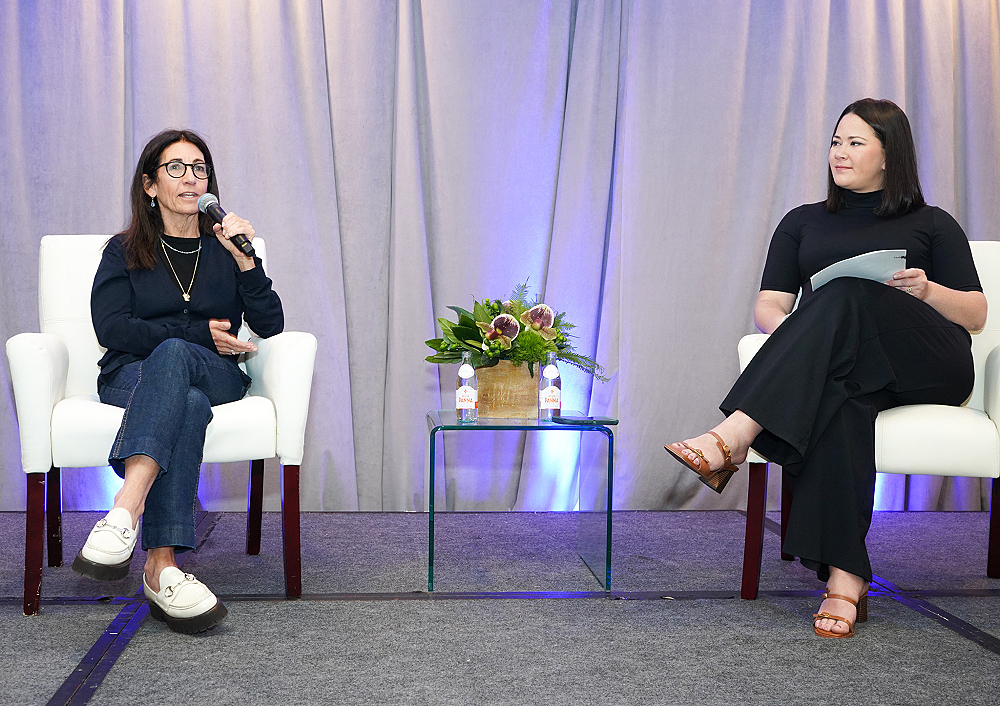
At Cart.com’s invitation-only CartCon, held April 21-23 at The Beach Club at The Boca Raton, industry experts opened up about failure, reinvention, tariff chaos, and what it actually takes to build something that lasts. Sessions were moderated by CNBC retail reporter Gabrielle Fonrouge and Berns & Co. Editorial Director Jessica Binns.
She Didn’t Know What She Was Doing. That Was the Point.
Makeup artist, entrepreneur and Jones Road Beauty founder Bobbi Brown traced her origin story from theatrical makeup major (a program she invented because the school didn’t offer one) to waitress to Vogue cover artist, to the lipstick she made because she hated everything on the market. The concept was simple and radical: makeup that made people look like themselves. When a Bergdorf Goodman buyer initially passed on carrying her line, Brown called Saks, dropped the name with some creative license, and got Bergdorf back on the phone.
What gave her the confidence to bring something so counter to the market to life? “I had no confidence at all,” she said. “I was just very naive.” That naivety was the point. Without a roadmap, she couldn’t be paralyzed by one, she said, drawing the parallel directly to where retail leaders sit now with AI.
During her Estee Lauder era, the late Leonard Lauder had promised Brown total autonomy and kept his word for roughly 15 years. When corporate layers multiplied and she was eventually cut out of her own hiring decisions, she stayed two years longer than she should have. When the company offered her a graceful exit and nothing meaningful to do, Brown walked out. “When I got downstairs, all this joy came to me, and all this stress left,” she said.
She launched Jones Road Beauty in October 2020, during a pandemic, one week before a presidential election, and against her advisors’ counsel. Brown turned on the lights anyway, and the second time around felt nothing like the first. Feedback loops that once stretched on for months now took just days, thanks to new technology. Jones Road hit $2 billion in revenue before growth leveled off recently, with Brown’s son Cody now running the show. The founder is also a Claude convert, often pulling up Anthropic’s enterprise AI chat model mid-Zoom when marketing presentations devolve into jargon-heavy muck.
The Sheets Were Wrong. All 37 Prototypes.
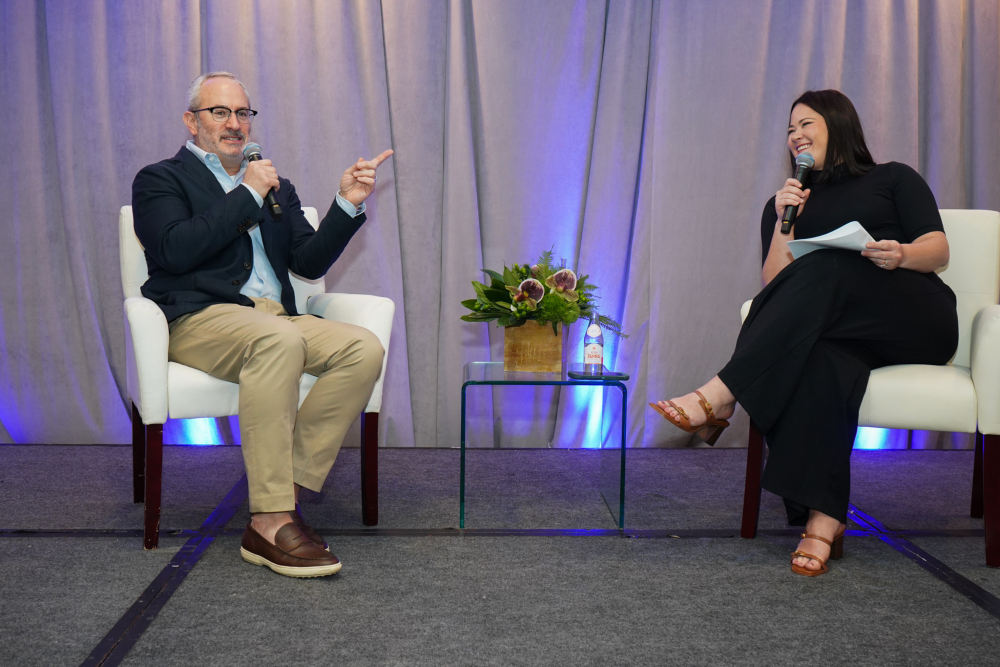
Brooklinen CEO and CNBC retail reporter Gabrielle Fonrouge at CartCon 2026 in Boca Raton, Fla.
Brooklinen CEO Billy May joined the bedding company in 2023, nine years after its founding by a husband-and-wife team who built the business from a finance mindset: disciplined capital allocation, milestone-driven investment, profitability from the start. Though that structure saved them when the DTC bubble burst, product had gotten a little bit lost along the way. Eighty percent of the assortment had launched in the company’s first four years, set and largely forgotten as Covid growth masked a shifting competitive landscape.
May took a measured approach to the existing team. “This is not a rip and replace,” he told them. “This is Brooklinen 2.0.” The linen relaunch became the proof of concept, requiring 37 prototypes. The original product hadn’t met Brooklinen’s own lifetime warranty standard, with tensile strength a particular sticking point. When the work was done, the average product review rose from 4.1 to 4.5 stars, and the return rate dropped. May joined customer calls throughout the process. “I wanted to hear consumers,” he said, “not an interpretation of what they were saying.”
AI also accelerated the insight loop. Where customer feedback once required armies of people to process, May’s team now aggregates signals across every touchpoint and surfaces themes in near real time. “AI is truth serum,” he said. “Garbage in, garbage out.”
Smart Money, Real Talk: What Winning Wellness Brands Actually Look Like
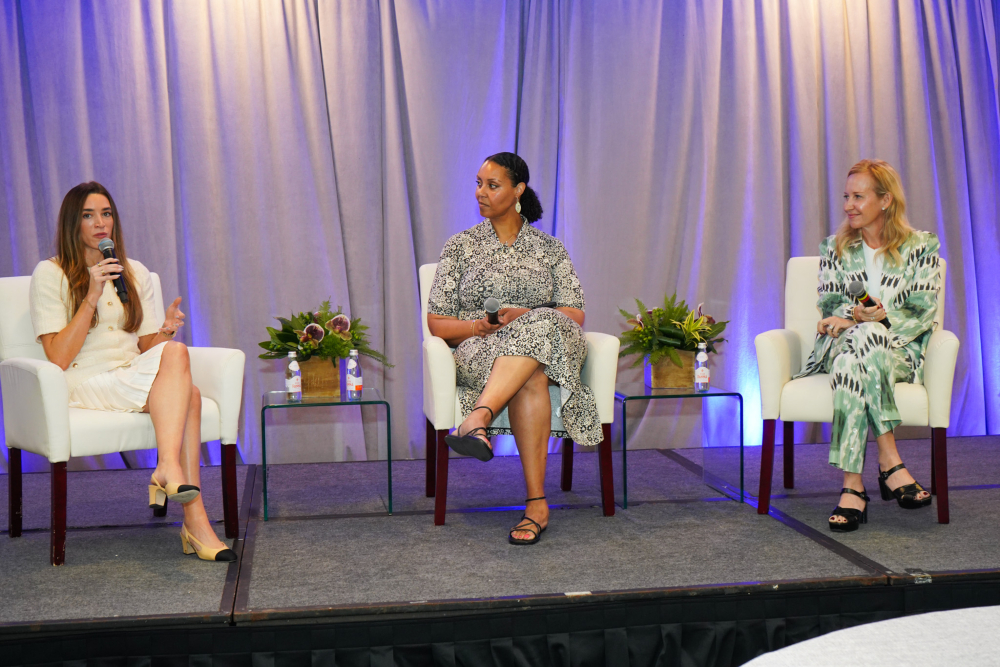
True Beauty Ventures Co-Founder Cristina Nuñez, Berns & Co. Editorial Director Jessica Binns, and Clerisy Co-Founder and Managing Partner Alexandra Wilkis Wilson at CartCon 2026 in Boca Raton, Fla.
Cristina Nuñez, co-founder of True Beauty Ventures, delivered a clear-eyed assessment of what winning looks like today: disciplined, pressure-tested growth, strong unit economics, and organic consumer love that no marketing budget can manufacture. “Growth at all costs doesn’t exist in today’s world anymore,” she said. Alexandra Wilkis Wilson, co-founder of consumer growth equity fund Clerisy, looks for founders with unmistakable clarity of mission, especially at the early stage when brand and founder are virtually one.
K18, Nuñez’s first True Beauty investment, illustrates the power of a hair care brand that truly makes a difference. Using IP that repairs damaged hair at the molecular level, the brand generated word of mouth that ignited almost immediately after launch: when people saw and felt the results, they couldn’t stop talking, she said. The brand sold to Unilever in late 2023, returning 80% of True Beauty’s first fund in three-and-a-half years.
On scaling, both investors flagged the same existential risk: losing the indie agility that made a brand special in the first place. Speed, consumer proximity, the ability to react are the structural advantages small brands hold over large ones, and the infrastructure required to scale can quietly erode them.
The Tunnel Walk Is the New Runway
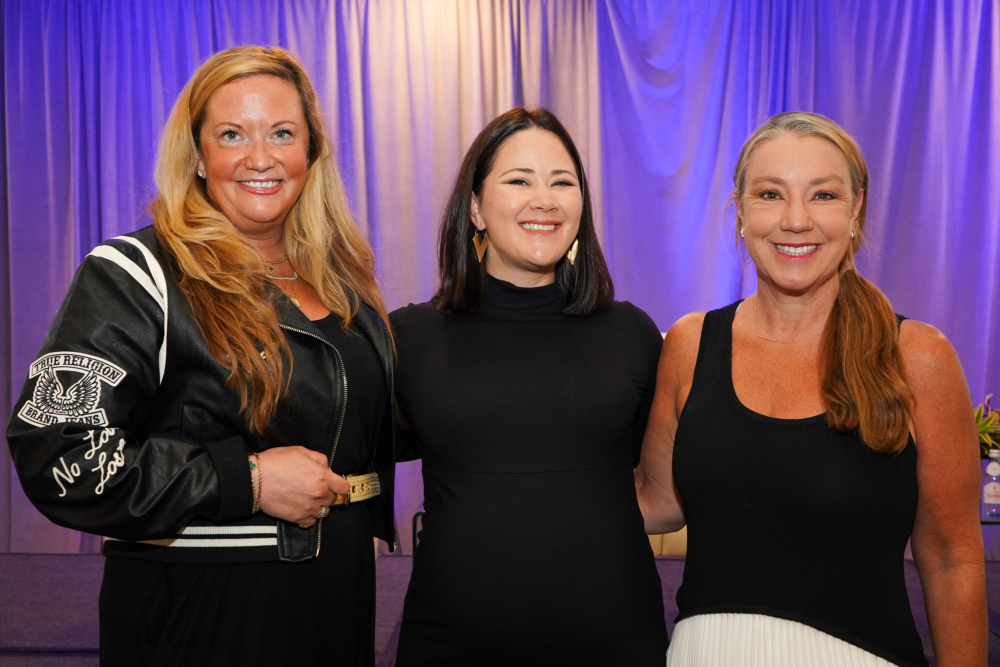
True Religion CMO Kristen D’Arcy, Gabrielle Fonrouge and Fanatics Advertising Chief Revenue Officer Jeremi Gorman at CartCon 2026 in Boca Raton, Fla.
Kristen D’Arcy, CMO and Head of Digital Growth for True Religion, opened with a pair of eye-opening stats: 63% of sports fans have purchased a product because an athlete endorsed it, while 75% of consumers view athletes as more authentic than traditional celebrities. True Religion has deliberately leaned into these findings, building “Team True,” an influencer army of roughly 250 athletes, musicians and fashion voices that drives engagement rates of six to eight percent against a retail industry average of two.
Jeremi Gorman, Chief Revenue Officer of Fanatics Advertising, also illustrated the power of sports and culture. The now-legendary Los Angeles Dodgers cherry blossom jersey, limited to 4,000 units and dropped exclusively in the app, sold out in four minutes against a 40,000-person waitlist. The math was intentional: enough people to make the collectible culturally visible, not so many that it stopped being cool.
Nostalgia was a key theme. True Religion’s Von Dutch collaboration, anchored in Y2K aesthetics and brought to life with the Love Island cast, became the brand’s best collab of the last year. For Fanatics, the recent passing of Angels legend Garrett Anderson prompted an immediate jersey run in the 2002 California Angels colorway. “People don’t want it to say Los Angeles Angels of Anaheim,” Gorman said. “They want it to say California Angels.” The ability to turn that kind of moment quickly, she argued, is a competitive advantage that only deepens over time.
The Candid CEO: AI, Chaos, and the Future of Commerce
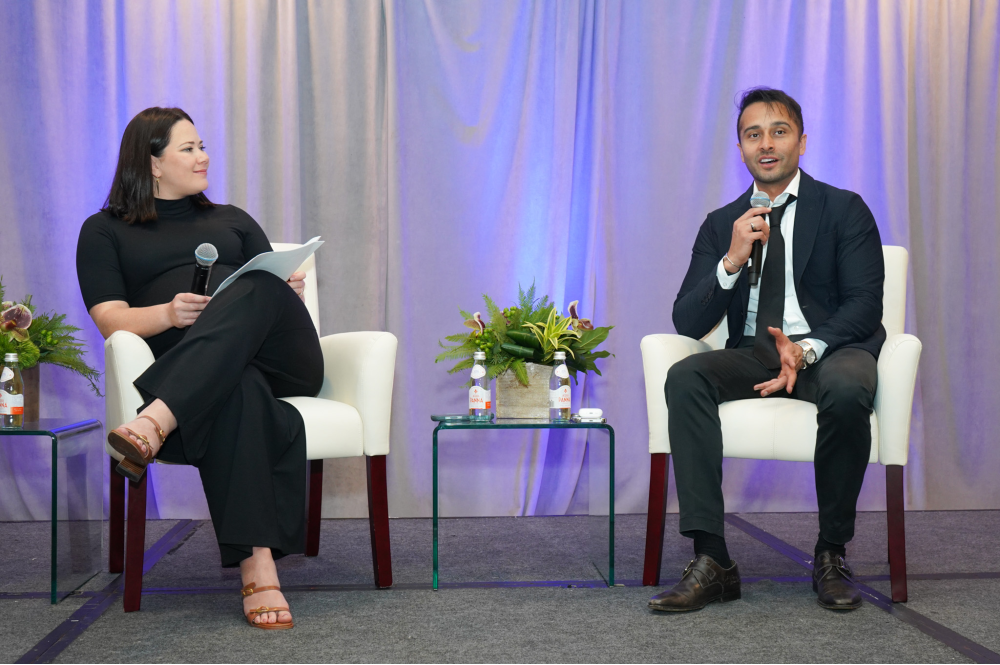
Gabrielle Fonrouge and Cart.com CEO Omair Tariq at CartCon 2026 in Boca Raton, Fla.
Cart.com CEO Omair Tariq pulled back the curtain on his entrepreneurial bent, sharing how at 17, he was buying jewelry for $2 in the flea market and selling it for $6 to fund his own college education. What followed was Blinds.com (built to $400 million, sold to Home Depot in 2014), six years building Google’s interconnected retail infrastructure, and now Cart.com. On the current environment, he offered an unfiltered take on last year’s extreme trade volatility, with tariffs, supply chain disruption and a shaky consumer, saying that turbulence is here for at least another 12 months.
His take on AI cut against the prevailing hand-wringing. The cost of AI is not the barrier, he argued. The expensive part is people not using it, or using it the wrong way. Tariq handed down his own mandate to every member of his leadership team, instructing them to go home over a weekend, download Claude or ChatGPT or Copilot, and build something with it. He offered up freight invoices as a striking example of where AI makes a tangible difference: a process that once required ten people now runs with half a person, producing hundreds of millions in processed freight with zero errors over four-and-a-half months.
Tariq laid out three predictions for the next two years: brand becomes more valuable than ever as marketing is commoditized by AI; creators and influencers take over product distribution and may become direct competitors; and AI-driven pricing compression eventually creates a margin bump followed by a race to the bottom, with brand equity as the only protection. On the workforce question, he was optimistic. The rise of the solo founder, now empowered to build what once required entire teams, may outpace job displacement. “The world belongs to content creators and builders,” he said.
Ground Shifting, Business Running
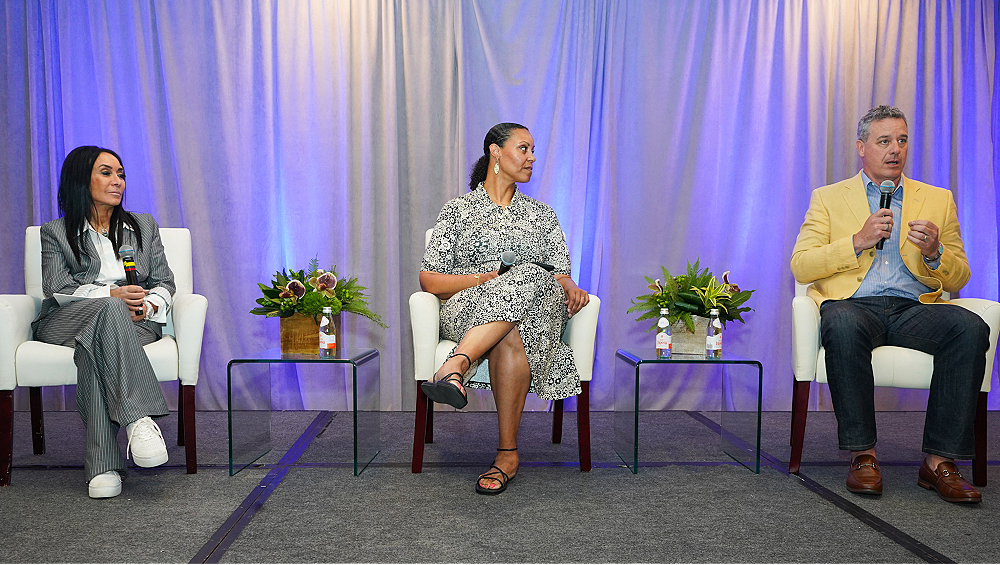
APL Managing Partner NJ Falk, Jessica Binns, and Passport Chief Commercial Officer Adam Langston at CartCon 2026 in Boca Raton, Fla.
Adam Langston, Chief Commercial Officer of Passport, which guides more than 1,000 brands on cross-border commerce and trade, offered the most panoramic view of how 2025 actually unfolded: a year of whiplash, where the promises and reversals of trade policy made supply chain planning feel like guessing. For many brands, the instinct was to chase new manufacturing locations, only to find the math breaking down before the move was complete. NJ Falk, Managing Partner of Athletic Propulsion Labs (APL), touched on the challenges of running a business when the ground keeps shifting.
Langston walked through the two financial recovery mechanisms now available to brands that were stuck with massive tariff bills last year: duty drawback, and IEEPA tariff refunds accessible via the federal government’s CAPE portal, created after the Supreme Court struck down an estimated $166 billion in IEEPA tariffs. The catch: only 7% of eligible importers have signed up so far, he said. When the room was asked who had used the portal, just one hand went up: May, the Brooklinen boss, confirmed the company is getting $1 million back.
CartCon 2026 ran on the energy of people who had real things to say and the room to say them. The operators who thrive are the ones who stay curious, stay close to their customer, and refuse to wait for the playbook to arrive.
About the Author:
Jessica Binns is Editorial Director at Berns & Co., where she leads editorial strategy and content programming, including the launch of a new thought leadership series profiling senior executives shaping the future of fashion, retail, and consumer goods. A journalist and editor with more than 15 years of experience covering apparel, footwear, retail, trade policy and tech, she is a contributing writer for Vogue Business and the former Managing Editor of Sourcing Journal. Her work has also appeared in WWD, Footwear News, and Retail Dive, and she has appeared on CNN This Morning with Audie Cornish to discuss the evolving fashion landscape.
